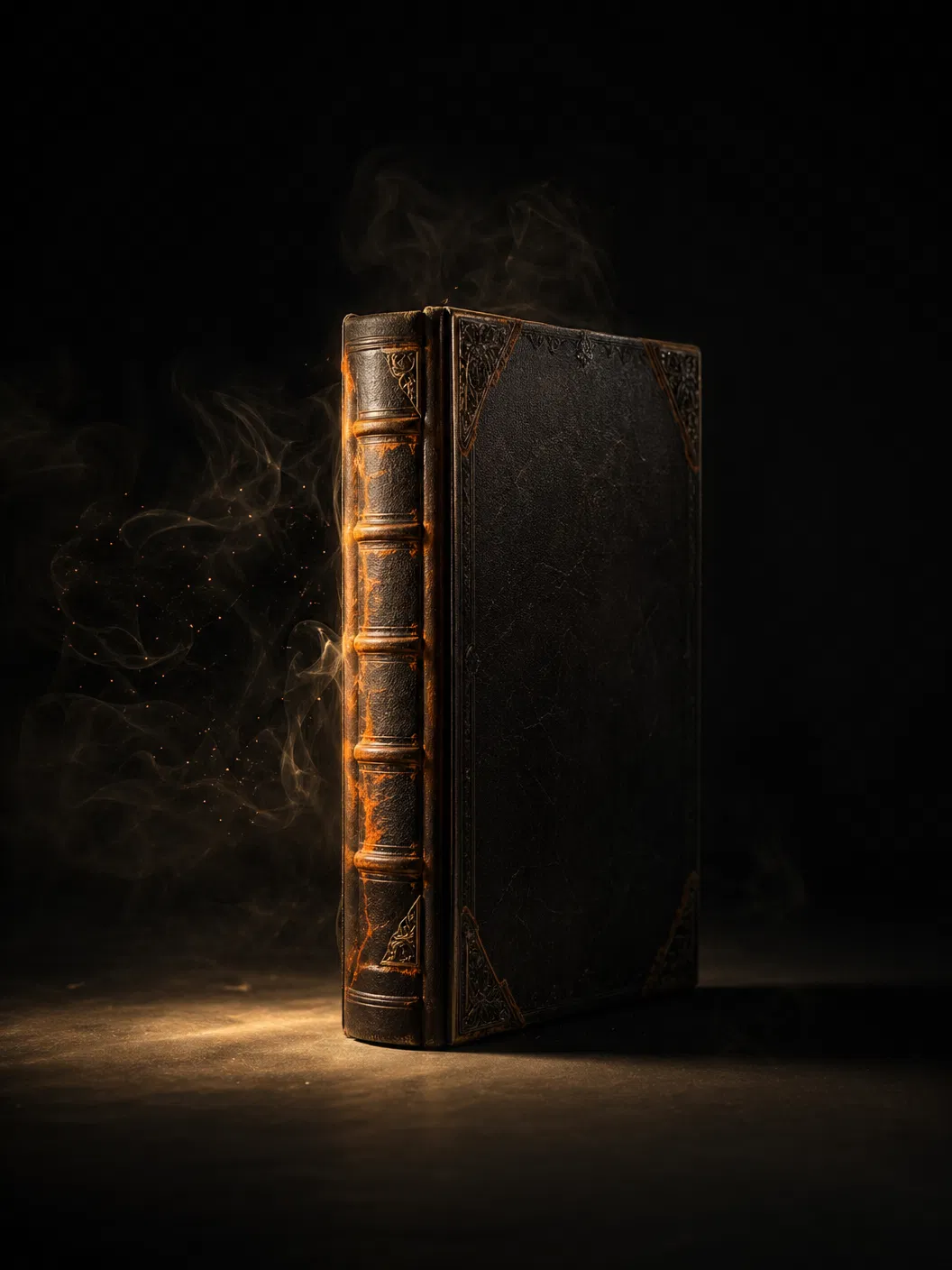
Random Man
GENRE & FORMAT
Dark Fantasy • 164,000 words • First in a planned series
OPENING LINE
"Todd Ransom turned his housekeeper into a Chihuahua. That was the good part of his week."
STATUS
Currently in agent submission. Complete manuscript available upon request.
Full Description
Todd Ransom turned his housekeeper into a Chihuahua. That was the good part of his week.
Todd is a chemical engineer in Albuquerque whose emotional states have started bending probability — objects failing around him, coincidences cascading, furniture occasionally destroyed. When a covert Bureau of Anomalous Events recruits him, he discovers he's been generating a chaos and entropy field for years. He'd find this more manageable if it weren't for the alien researchers who augmented him by accident, the ancient adversary whose weapon of choice is intellectual seduction, and the wager between Heaven and Hell that apparently placed him at the center of the oldest argument in creation.
Todd is not chosen. He's inconvenient. His precision and his instability together make him the variable nobody's model includes — not the Bureau's, not Lucifer's, not the alien architects who seeded his planet and now can't decide whether to terminate him or watch what he does next.
The woman he loves made her choice with full knowledge of what it would cost. The people he trusted most will each betray him — in ways that are cold, intimate, and philosophical in turn. And the twelve-year-old neighbor who treats his chaos field as a mild inconvenience is the only anchor keeping him human.
RANDOM MAN is a novel about free will: what it actually costs, and what it means to choose your own path when every coercive force in the universe believes the path belongs to them. It's funny until it isn't. Then it's honest instead.
For Readers Of
Good Omens
by Neil Gaiman and Terry Pratchett
John Dies at the End
by David Wong
Piranesi
by Susanna Clarke
Series Information
RANDOM MAN is the first book in a planned series.
The wager continues. The board has changed. The quiet universe is waiting to see what the knight does next.
Why This Story
The Spark
My wife calls me Random Man. Some days I'm oblivious — insensitive, somewhere else entirely, operating on a frequency nobody else can hear. Other days she says I'm PhD level. The switch between the two is, apparently, unpredictable.
I found that funny. Then I found it interesting. Then I couldn't stop thinking about it.
I've spent most of my career trying to bring order to chaos — in processes, in organizations, in people. But the thing I learned, slowly and sometimes the hard way, is that you can't kill the chaos entirely. The spark of disorder is also the spark of innovation, disruption, and intuition. Squash the chaos and you kill the spirit.
Random Man grew out of that tension — the collision between the mundane and the extraordinary, the idea that someone could wake up one morning with the power to reshape reality and still have to figure out what to do about their mortgage. What happens when the universe's biggest powers converge on one completely unremarkable person? Not a chosen one. Not a hero. Just a chemical engineer named Todd who suddenly becomes the most important variable in an equation nobody fully understands.
The free will question came from Rush, which is where a lot of things start, and sent me straight back to Genesis. The apple. The serpent. The choice. The most radical act in that story isn't the fall — it's that the choice was real. That it had to be. That a universe without genuine free will isn't a universe worth saving.
Todd gets to find that out the hard way.
The result is funny, philosophical, and occasionally heartbreaking. Which, honestly, describes most Tuesdays.
The best stories aren't about powers. They're about what you do when everyone wants to control yours.
Books That Shaped Random Man
Rivers of London
by Ben Aaronovitch
The book that proved urban fantasy could be genuinely funny and genuinely dark in the same sentence. Peter Grant is exactly the kind of protagonist I wanted to write — someone with a specific professional identity dropped into a world that has no patience for his confusion.
Piranesi
by Susanna Clarke
Proof that a novel can operate at cosmic scale while staying entirely inside a single human voice. The architecture underneath is enormous. The story on the surface is intimate. That tension is what I was reaching for.
The Tainted Cup
by Robert Jackson Bennett
A Hugo winner for good reason. Bennett builds worlds that feel like they follow rules nobody told you about, then reveals the rules one piece at a time. The analytical protagonist at the center of something far larger than himself — that's the DNA Random Man shares.
Good Omens
by Terry Pratchett and Neil Gaiman
Heaven and Hell as institutions with personalities, staffing problems, and genuine philosophical disagreements. Funny until the stakes become real, then honest about what the stakes actually are. I read this before I started writing and I read it again after I finished.
The Fifth Season
by N.K. Jemisin
The most formally ambitious novel I've read in this genre. Jemisin proved that literary SFF could win the Pulitzer conversation without apologizing for being fantasy. That permission mattered.
Catch-22
by Joseph Heller
Not fantasy. Not science fiction. But the book that taught me that absurdity and horror can occupy the same sentence, and that the funniest books are sometimes the most serious ones.